Dumpster Diving on the Blockchain: The Contrarian Art of Profiting From Launchpad Wreckage

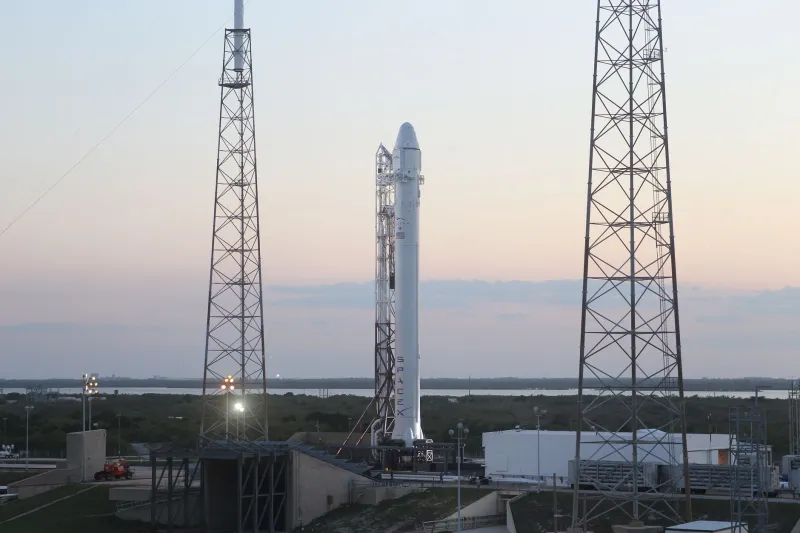
Photo: davric, Public domain, via Wikimedia Commons
There's a certain kind of crypto investor you won't see on Twitter bragging about their bags. They're not chasing the next hot IDO or refreshing launchpad whitelists at 2 a.m. Instead, they're scrolling through the wreckage — tokens down 95%, communities half-abandoned, GitHub repos collecting dust — looking for the one signal that separates a genuine second act from a permanent flatline.
Cold-blooded? Maybe. Profitable? Sometimes spectacularly so.
This is the world of launchpad resurrection plays, and while it's not for everyone, understanding how these contrarian investors operate can teach you something useful about risk, value, and what actually makes a crypto project worth anything in the first place.
Why the Graveyard Has Real Estate Worth Buying
Here's the uncomfortable math: most launchpad tokens lose 80–95% of their launch-day value within 18 months. That's not speculation — it's documented pattern. But within that graveyard, there's a meaningful distinction between tokens that are dead and tokens that are cheap.
A token priced at $0.003 that launched at $0.12 isn't automatically worthless. If the underlying protocol is still processing transactions, if a Discord server still has a few hundred genuinely active users, if the dev team is still pushing commits — that token might be dramatically mispriced relative to its actual utility. Markets overshoot on the downside just as enthusiastically as they overshoot on the way up.
The contrarian thesis is simple: when retail panic-sells a token into oblivion, the emotional component of that selloff creates mispricings. And mispricings, for the patient investor, are the whole game.
The Three Things Resurrection Investors Actually Look For
Not every crashed token deserves a second look. The investors who do this seriously have a short list of filters they run before anything else.
1. Does the protocol still do something?
This sounds obvious, but you'd be surprised how many people skip it. Pull up the token's blockchain explorer and look at actual transaction volume over the last 30 days — not price charts, transactions. Is anyone actually using this thing? A DEX with $40K in daily volume isn't exciting, but it's alive. A protocol with zero activity for six months is a different story entirely.
2. Is there a community that hasn't fully given up?
Check the Discord or Telegram. Not the follower count — the conversation. Are people still asking development questions? Are there users troubleshooting issues with the product? Or is it just a handful of bitter bag-holders posting price complaints? The former is a green flag. The latter means the social infrastructure has collapsed, and without community, most DeFi protocols can't recover.
3. What's the token's supply situation?
A crashed token with massive unlock events still ahead is a trap. If the vesting schedule is still releasing tokens into a market with zero buying pressure, you're catching a falling knife with more knives above it. Tokens where the unlock schedule is largely complete — where the inflation risk has already been priced in — sit in a much more interesting position.
Real Comebacks Worth Studying
The crypto space has produced a handful of legitimate resurrection stories that illustrate what's actually possible here.
REN, the cross-chain liquidity protocol, went through a brutal collapse period tied to its acquisition by Alameda Research and the subsequent FTX catastrophe. The token cratered. But the underlying technology — a legitimate cross-chain bridge with real integrations — kept attracting developer attention, and a community fork effort eventually breathed new life into the ecosystem. Investors who bought at the absolute bottom of the panic saw extraordinary returns before things stabilized.
Similarly, certain NFT infrastructure tokens that collapsed during the 2022 bear market saw meaningful rebounds when NFT activity picked back up in late 2023 and into 2024 — not because the hype returned, but because the infrastructure they'd built still worked and still had users.
The pattern in both cases: utility survived the price collapse. The market eventually caught up.
The Metrics That Separate Comeback from Coma
If you want to get systematic about this, here's a working framework for evaluating crashed tokens.
On-chain activity ratio: Divide current monthly active addresses by the peak monthly active addresses from the token's best period. Anything above 30% suggests the user base hasn't fully evaporated. Below 10% is a warning sign.
Developer commit frequency: Check GitHub. If the repo has seen commits in the last 60 days, someone is still working on the product. If the last commit was nine months ago, the team has mentally moved on even if they haven't publicly said so.
Liquidity depth vs. market cap: A token with a $500K market cap but only $15K in DEX liquidity is a liquidity trap — any meaningful buy order will spike the price, and any meaningful sell will crater it. You want to see liquidity depth that's at least 5–10% of market cap for the play to be executable at scale.
Community sentiment polarity: Run a quick scan of the last 200 Telegram or Discord messages. What percentage are product-related versus price-related? Healthy communities, even struggling ones, spend more time talking about the product than the price. Dying communities invert that ratio completely.
The Risk/Reward Calculus — And Why Position Sizing Is Everything
Let's be direct: this strategy has a high failure rate. For every token that pulls off a genuine comeback, there are a dozen that just slowly drift toward zero while a handful of true believers convince themselves that the bottom is always just around the corner.
The investors who make money at this aren't necessarily better at picking winners — they're better at position sizing. They allocate small enough that a total loss on any single position doesn't materially hurt them, but large enough that a genuine 10x or 20x move creates meaningful portfolio impact.
A common framework: no single resurrection play should represent more than 1–2% of your total portfolio. At that size, you can hold 10–15 positions across different collapsed tokens without catastrophic downside if most of them go nowhere. The one or two that genuinely recover can still move the needle.
This is not a strategy for people who need the money they're investing. It requires patience measured in years, not months, and the emotional discipline to watch a position drop another 50% without panic-selling.
What This Teaches You About Launchpad Investing Generally
Even if you never buy a single crashed token, studying this corner of the market sharpens your instincts for evaluating any launchpad project. The resurrection investors are essentially asking: what does this token need to be worth something? And that question — stripped of hype, stripped of influencer endorsements, stripped of flashy marketing — is exactly the question you should be asking before you put money into a brand-new launch.
Utility. Community. Tokenomics that don't self-destruct. These aren't just the ingredients for a comeback. They're the ingredients for not needing one.
The launchpad graveyard is a strange place to find clarity. But sometimes the clearest lessons about what makes crypto projects work come from studying the ones that didn't.